The Reticular Activating System, and Trauma Healing
Trauma lives in the nervous system—whether in humans or animals. It shapes how we perceive the world, how we respond to stress, and how safe we feel in our own bodies. Healing is not just physical. It is rhythmic, relational, and deeply intuitive.
One of the key systems involved in this process is the Reticular Activating System (RAS)—a powerful network within the brainstem that acts as a gatekeeper for awareness, arousal, and attention. When we combine an understanding of the RAS with the subtle awareness, we begin to access a more complete pathway to healing—for both humans and animals.
What is the Reticular Activating System?
The RAS is part of the reticular formation in the brainstem. It filters incoming sensory information and determines what is important enough to bring into conscious awareness. It also plays a major role in regulating:
Wakefulness and sleep cycles
Alertness and focus
Startle responses
The body’s readiness for action (fight, flight, freeze)
When an individual—human or animal—has experienced trauma, the RAS often becomes hypervigilant. It begins scanning constantly for danger, even when no threat is present.
From an energetic perspective, this can feel like a system that has lost its sense of internal orientation—constantly reaching outward, searching, bracing, and preparing.
This is especially noticeable in:
Anxious or reactive horses
Dogs that startle easily or cannot settle
Humans who feel “on edge,” overwhelmed, or unable to relax
In this state, the nervous system is biased toward sympathetic activation (fight or flight).
Why the Mind Must Feel Safe First
When someone is in a persistent flight state, attempting to work directly on the body without first addressing the nervous system can be ineffective—or even overwhelming.
The RAS is continuously asking one question:
“Am I safe?”
But beneath that question is something even deeper:
“Can I soften?”
If the answer is no, the system remains guarded. Muscles stay tight. Breathing stays shallow. The body resists change.
This is why, in both animals and humans, we must reach the mind—and the energetic field of awareness—before the body can truly follow.
Through gentle, intentional presence and touch, Craniosacral Therapy communicates directly with the nervous system. It also meets the body in a quieter space—where subtle rhythms, fluid motion, and energetic patterns can be perceived and supported.
As the RAS begins to quiet and the system no longer needs to scan for threat, a shift begins:
The mind moves out of hyper-alertness
The nervous system begins to down-regulate
A parasympathetic (rest-and-repair) state emerges
The body remembers what safety feels like
Once this shift occurs, the body can finally let go.
How Craniosacral Therapy Supports the Nervous System
Craniosacral Therapy works with subtle rhythms within the body—particularly the craniosacral rhythm—to support the central nervous system.
Rather than forcing change, CST listens.
It follows.
It allows.
In this space, the practitioner is not “doing” to the body, but rather meeting it, sensing where there is restriction, hesitation, or holding—both physically and energetically.
This allows for:
Identification of areas where the system is holding tension or protective patterns
Gentle release without triggering defense
Regulation of the autonomic nervous system
Reorganization of deeper patterns held within the tissues and fluid body
For both animals and humans, this often looks like:
Slower, deeper breathing
Softening of the eyes and facial muscles
Decreased startle response
Improved mobility and comfort
A visible or palpable sense of settling
Often, there is also a quiet moment where the system shifts—sometimes subtle, sometimes profound—where the body unwinds in its own way.
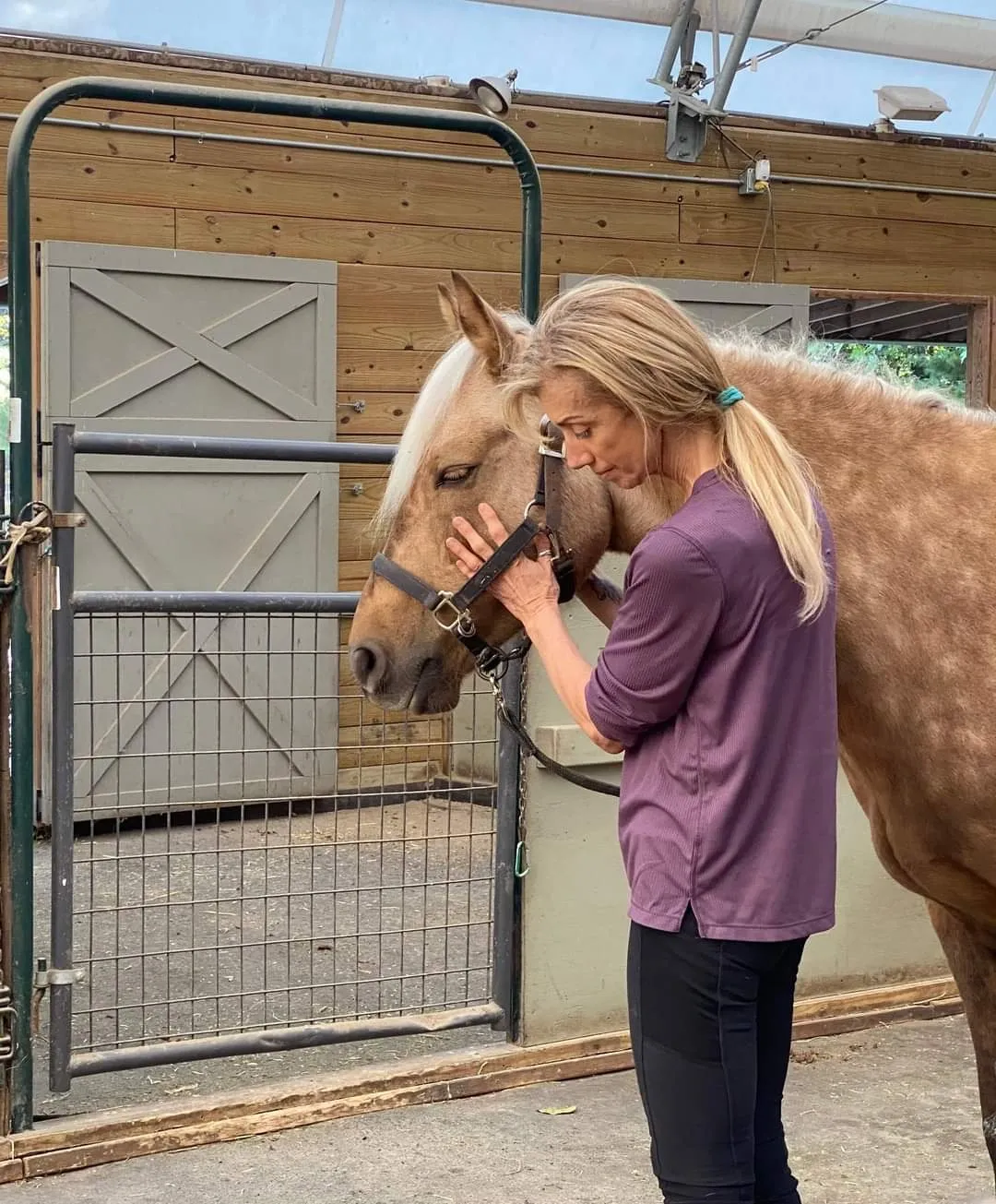
Attunement: Connecting Before Correcting (Especially with Horses)
Before any technique—before even placing hands—there is a powerful opportunity to influence the nervous system through attunement.
Horses, in particular, are masters of reading subtle cues. They are constantly scanning not just their environment, but you—your breathing, your tension, your focus, your internal state.
When a horse is stressed or in a flight state, trying to override that state with pressure or correction often increases resistance. The nervous system does not feel safe—it feels challenged.
Instead, there is another way.
By becoming present, grounded, and internally regulated, you begin to communicate something different:
“There is no threat here.”
From this place, you can:
Soften your focus and breathing
Allow your body to become neutral and non-demanding
Gently invite the horse’s awareness toward you (rather than forcing it)
Often, you will feel a moment—subtle but clear—when the horse begins to shift. A blink. A breath. A lowering of the head. A softening through the eye or jaw.
That moment matters.
Rather than pushing forward, this is where you retreat, pause, or soften even more.
Why?
Because the nervous system learns through contrast and safety—not pressure.
When the horse discovers that they can move toward regulation and nothing is asked of them in that moment, trust begins to build. The Reticular Activating System quiets. The need to scan decreases.
You are no longer something to brace against—you become something the horse can orient toward.
This is not separate from Craniosacral Therapy. It is the foundation of it.
It is how we begin to reach the mind—so the body can follow.
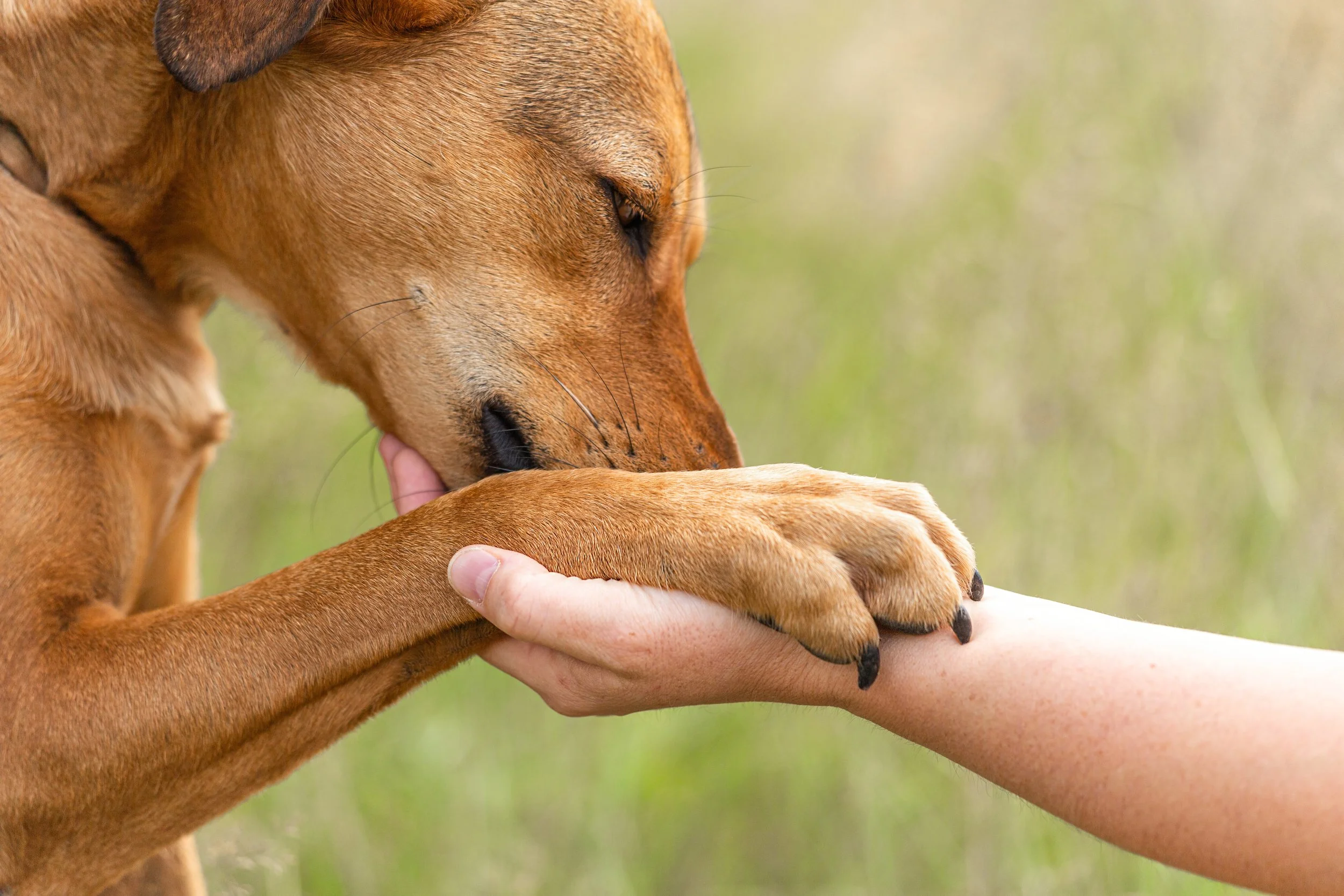
Trauma in Animals: A Nervous System and Energetic Perspective
Animals, especially horses, are incredibly attuned to their environment. Their survival depends on it. They also live closer to their instinctual and energetic awareness than humans often do.
When trauma occurs—whether physical or emotional—their nervous systems adapt quickly.
However, those adaptations can become stuck.
A horse that has experienced fear may remain in a heightened state of alertness. A dog may become reactive. These are not behavioral problems—they are nervous system responses shaped by experience.
Energetically, it can feel as though part of the system is still oriented toward the moment of threat.
Craniosacral Therapy helps by:
Reducing hypervigilance
Supporting the RAS in filtering sensory input more appropriately
Allowing the animal to experience safety again
Offering a quiet space where their system can reorganize
When the mind perceives safety, the body follows with:
Release of muscular tension
Improved movement patterns
Greater emotional regulation
A return to a more grounded, present state
Trauma in Humans: Reconnecting Mind, Body, and Awareness
In humans, trauma often creates a disconnect between mind and body. Even when we intellectually understand that we are safe, the nervous system may not agree.
This mismatch keeps the RAS in a protective loop.
Over time, we may also lose connection with the quieter internal rhythms that support regulation and healing.
Craniosacral Therapy gently bridges that gap. By working with the central nervous system and the body’s subtle rhythms, it helps:
Quiet mental overactivity
Reduce anxiety and overwhelm
Restore a sense of internal safety
Reconnect awareness with the body
Many people experience not just physical relief, but a sense of coming back into themselves—more present, more grounded, and more at ease.
As the parasympathetic system becomes more dominant, healing processes can begin—physically, emotionally, and energetically.
Do You Recognize This?
You may notice this work resonates if:
In your horse:
Constant scanning or difficulty settling
Startle responses that seem disproportionate
Tension that doesn’t resolve with training or bodywork alone
A sense that they are “somewhere else” mentally, even when standing still
In yourself:
Feeling on edge even when nothing is wrong
Difficulty relaxing or taking a full breath
A tendency to stay in doing, fixing, or anticipating
A sense that your body won’t fully let go
These are not flaws or behavioral issues.
They are nervous system patterns—often shaped by past experiences—that are still trying to protect.
The good news is: the nervous system can change.
And it often begins with small moments of safety, awareness, and connection.
The Shift: From Survival to Regulation
Healing is not about forcing the body to change. It is about creating the conditions where change becomes possible.
It is about listening deeply enough that the system no longer needs to protect.
By supporting the Reticular Activating System and guiding the nervous system out of a chronic flight state, Craniosacral Therapy allows both animals and humans to move from:
Hypervigilance → Presence
Tension → Softening
Reactivity → Regulation
And ultimately:
From survival… to safety.

A Nervous System–Centered, Heart-Led Approach at Equine Wellness Integration
At EWI, every session is approached with deep respect for the nervous system—whether I am working with a person or an animal.
There is no forcing, no overriding.
Only listening.
Listening to the body. Listening to the nervous system. Listening to the quieter rhythms beneath the surface.
Because when the mind feels safe, the body follows.
And when the body feels safe, healing unfolds—naturally, gently, and in its own time.
If you are interested in Craniosacral Therapy for yourself or your animal, I invite you to reach out to learn more about this gentle, integrative approach to healing.